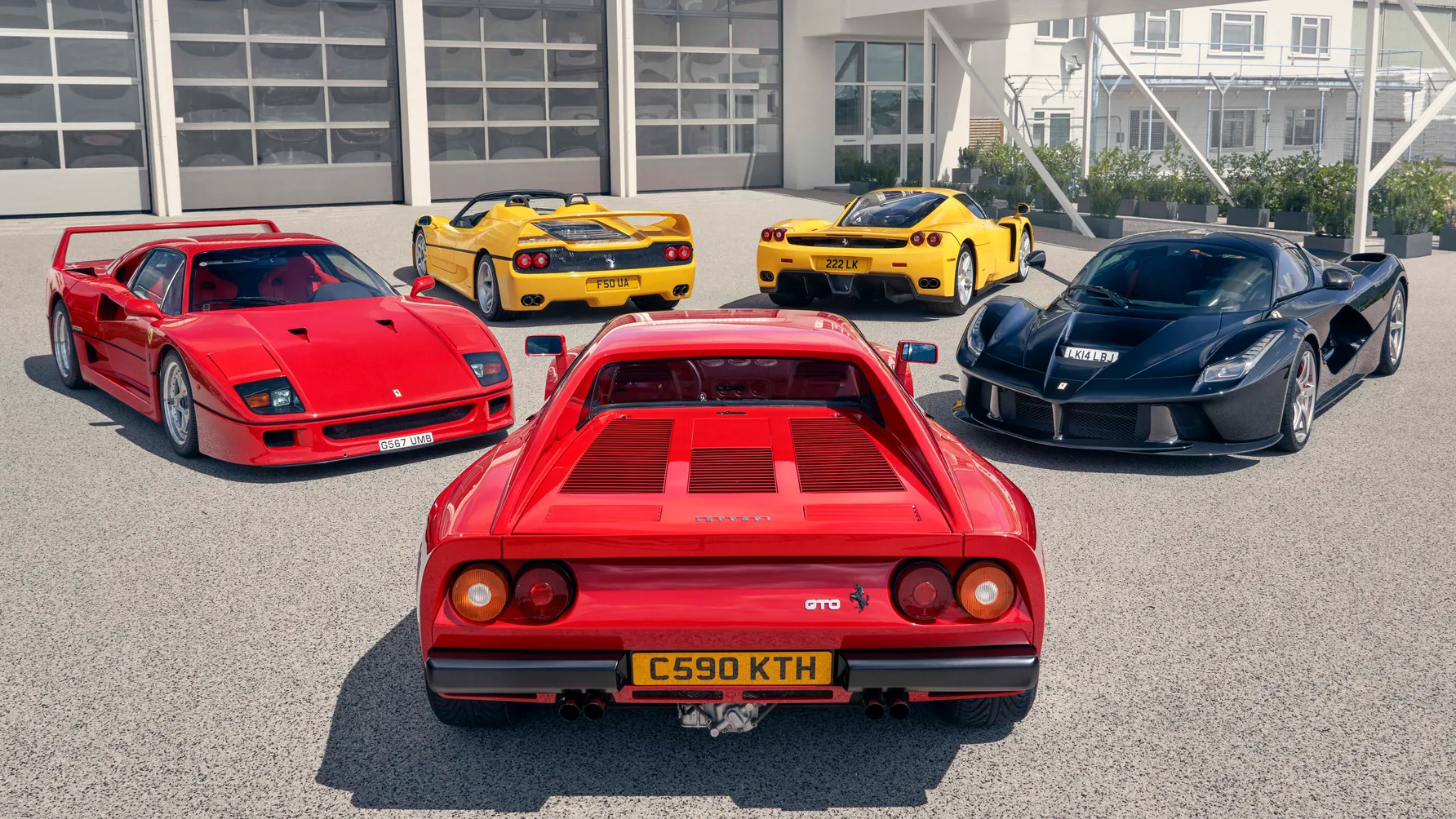
The Ferrari 288 GTO sits at the beginning of Ferrari's modern hypercar bloodline. When it was new, it cost roughly $84,000, which sounds cheap today because, well, it is. But it was not cheap in 1984. It was properly serious Ferrari money at the time, just nowhere near the $9 million to $11 million these cars are reaching today.
The strange part is that the 288 GTO never actually got to do the thing it was built to do. Ferrari created it to homologate a racing car for Group B. It built the road cars, developed a competition version, and prepared to go racing. That is literally what the name means. GTO stands for Gran Turismo Omologato.
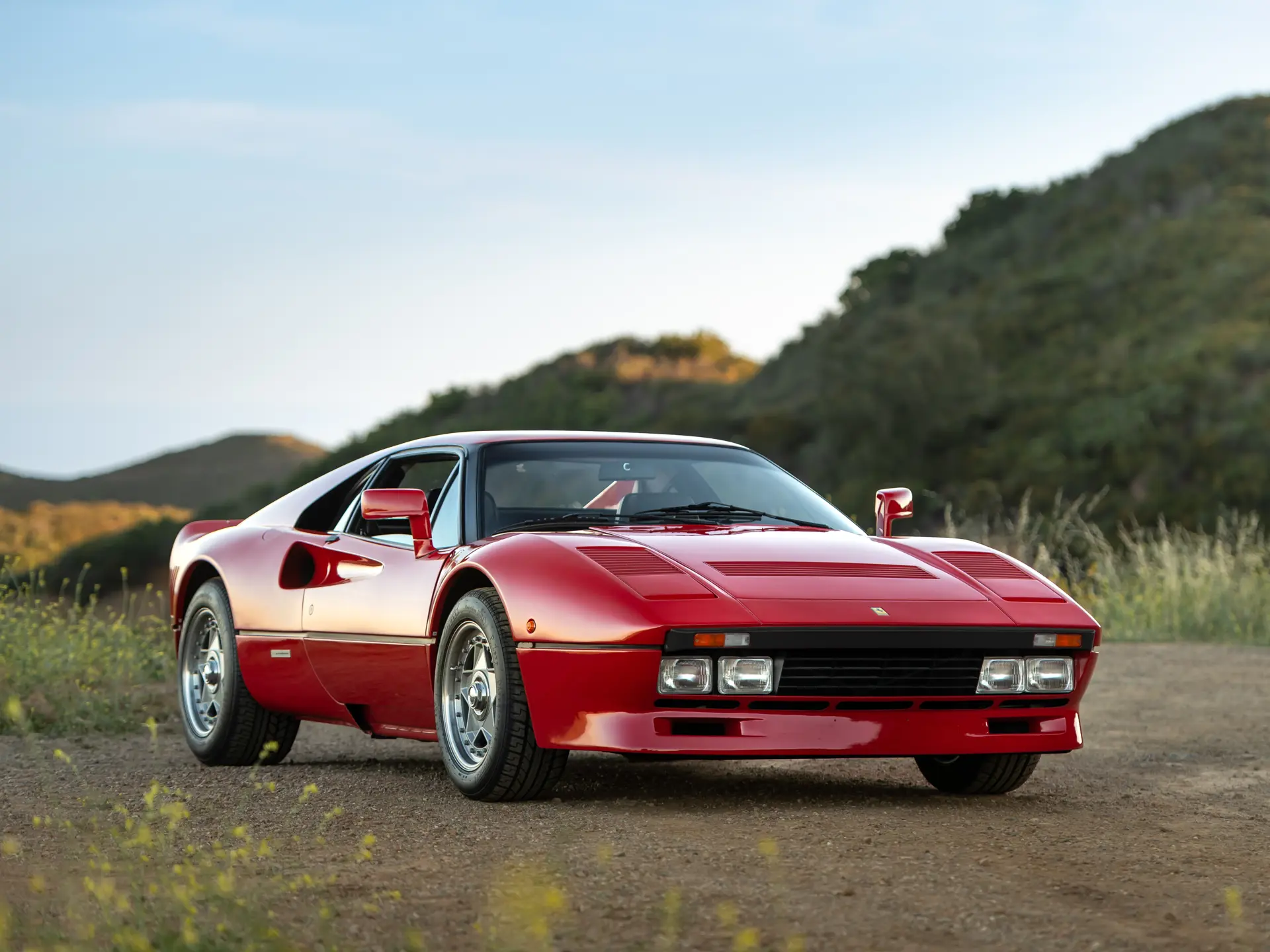
Ferrari officially called the car the GTO. Everybody else more or less labeled it the 288 GTO to distinguish it from the earlier and immensely famous 250 GTO. The 288 part came from the fact that it had a 2.8-liter V8. Yes, a tiny little 2.8-liter V8. It was twin-turbocharged, made 400 horsepower, and sent the power to the rear wheels through a proper five-speed manual gearbox.
Four hundred horsepower does not sound like a particularly frightening number now. Today, you can buy a soccer-mom SUV with more power, fancy seats, heated and cooled cupholders, and enough computers to manage every decision the driver makes. In 1984 it was slightly different. The GTO weighed roughly 2,500 pounds. It had no traction control, no stability control, and two turbochargers from an era when turbo lag was not just a line item on the specification sheet. It was literally part of the experience.
You flattened the throttle, that little 2.8-liter V8 began winding itself up, and then you waited. Not forever, but long enough to understand that something fairly substantial was on its way. Once the turbos came in, all 400 horsepower arrived through the rear wheels at once, and you had better be ready because there was no computer standing by to save you from your own confidence.
Built for Group B, orphaned by history
Ferrari claimed a top speed of around 189 mph, making the 288 GTO one of the fastest production cars in the world at the time. To the untrained eye, it looked a bit like a Ferrari 308, but underneath it had very little in common with one. The wheelbase was longer, the chassis was extensively reworked, the body used Kevlar, fiberglass, aluminum, and composite materials, and the engine was mounted longitudinally rather than transversely. Ferrari needed the extra room for the twin-turbo system because this was not supposed to be a mildly faster 308. This was going to become its new race car.
Ferrari unveiled the GTO in 1984 and initially planned to build 200 cars, the number required for homologation. It eventually built 272, but you could not simply walk into a dealership, point toward the red one, and ask whether they could throw in some floor mats. The cars were allocated through the proper Ferrari purchasing hierarchy we still know today. Favored customers with established relationships got access. Everybody else got to look at photographs and pretend they were not annoyed.
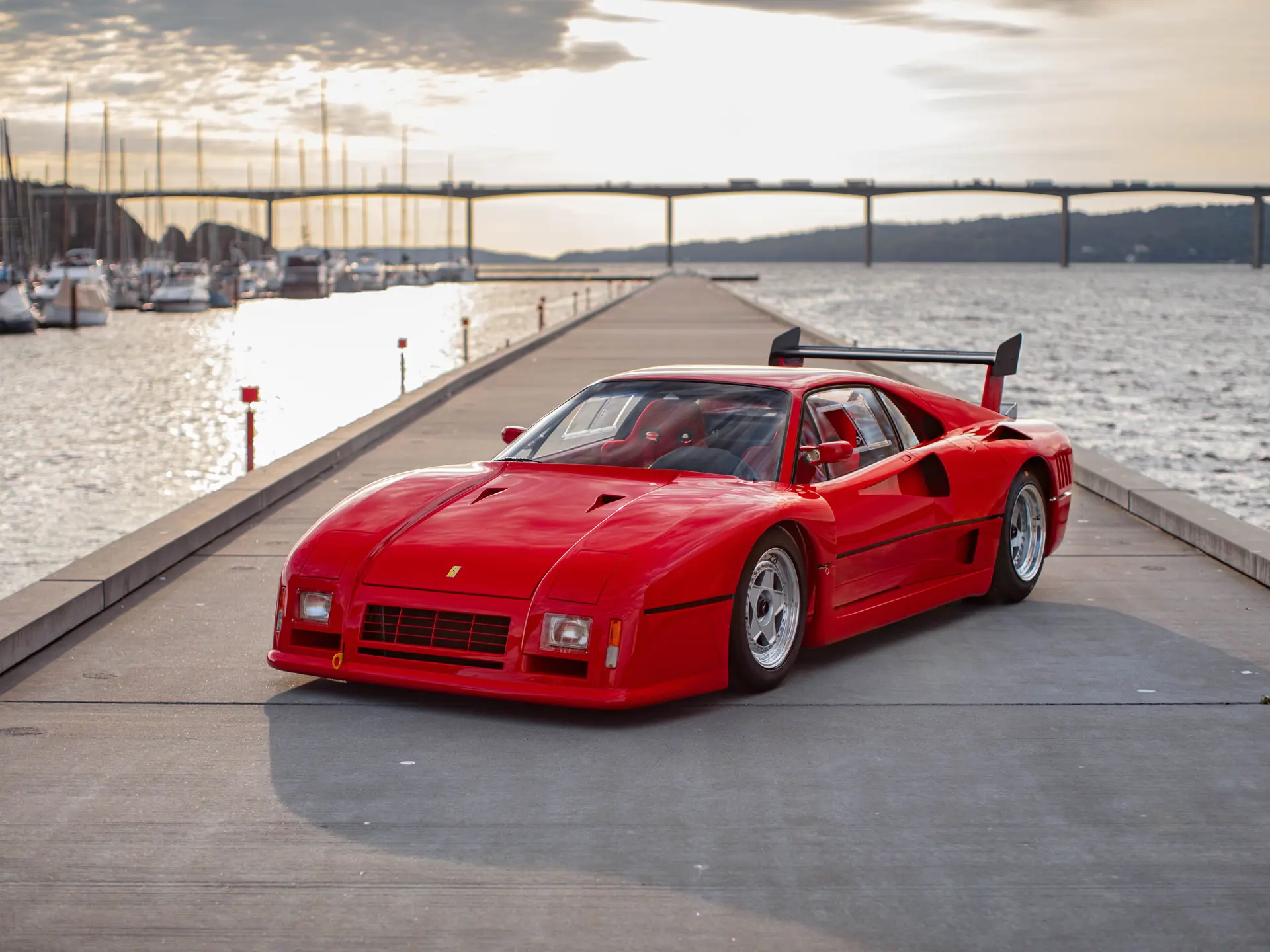
The road-going GTO was only the start. Ferrari's real Group B weapon was the 288 GTO Evoluzione, and it looked like somebody had taken a perfectly beautiful GTO and begun haphazardly attaching aerodynamic parts to it. It was lower, lighter, wider, and covered in ducts, vents, spoilers, and enormous aerodynamic surfaces. Depending on its stage of development, its twin-turbo V8 produced around 650 horsepower, and the entire car weighed roughly one metric ton. Ferrari built only six of them.
Most people associate Group B with rallying, and I do as well. It gave us the Audi Quattro, Peugeot 205 T16, Ford RS200, and Lancia Delta S4, some of the most famous and completely unhinged competition cars in motorsport history. The problem for Ferrari was that the circuit-racing side never really developed into anything meaningful, while the rally side developed into complete insanity.
Spectators regularly stood in the middle of the road while 500-horsepower rally cars approached at full speed, then moved aside at the last possible second. You do not need an engineering degree to understand that this was eventually going to end badly. After the fatal crashes that defined the 1986 season, the FIA announced that Group B would be banned. Manufacturers stopped development, racing programs were canceled, and Ferrari was left with a homologation road car and a competition version that had no meaningful place to compete.
Ferrari had built the weapon just as somebody canceled the war.
The standard 288 GTO never started a Group B race. The Evoluzione never raced at all. Normally, that would be the part of the story where the car becomes a weird footnote that gets rolled out of storage every few years so executives can describe it as an important technical exercise. That is usually corporate language for, "We spent a fortune and nothing happened."
The car that taught Ferrari what a hypercar could be
Ferrari did not waste what it built. It used the 288 GTO and Evoluzione programs as the foundation for the F40. The F40 was not simply a rebodied 288 GTO. That gives Ferrari's engineers nowhere near enough credit. It had different bodywork, more advanced aerodynamics, a larger 2.9-liter twin-turbo V8, and more power. It was more aggressive, more focused, and even less interested in comfort.
But it did not appear from nowhere. The 288 GTO established the formula. The Evoluzione pushed that formula toward complete insanity. The F40 finished the job. Lightweight composite construction, a longitudinal twin-turbo V8, rear-wheel drive, minimal luxury, enormous performance, and very little concern for whether the driver found it quiet, comfortable, or remotely forgiving. Ferrari itself describes the Evoluzione as a stepping stone toward the F40.
The F40 became an icon almost immediately, but without the 288 GTO and the Evoluzione, it probably would not have existed in the form we know today. And without the F40, Ferrari's modern hypercar bloodline would look very different. The F50 followed. Then the Enzo. Then LaFerrari. Now the F80. Each one represents Ferrari with most of the restraint removed.
That is what makes the 288 GTO so interesting. It has no famous racing victories, no championship, no Le Mans win, and not one competition lap in the category it was created to enter. Yet it became more historically important than plenty of cars that won everything. Ferrari set out to build a homologation special for a racing category. Instead, it created the starting point for the modern Ferrari hypercar.
Why the market finally gets it
The market now understands exactly where the 288 GTO sits. In January 2026, a 24,244-kilometer example sold for EUR 5.855 million. A separate low-mileage car sold for a world-record EUR 9.117 million, roughly $11.1 million at the time, and another exceptional example has since been valued at $9 million to $11 million.
In my opinion, those older sub-$8 million results no longer represent the market. I think the real floor for a 288 GTO is now around $10 million, and I do not believe we will ever see another one sell publicly for less than $8 million. The best examples have already crossed $11 million, and I do not think we are far away from seeing $15 million or even $18 million.
At that point, the 288 GTO begins moving into early McLaren F1 territory, which sounds ridiculous until you remember Ferrari built only 272 of them and this is the car that started the entire bloodline. The market values the 288 GTO because it sits at the exact point where Ferrari discovered what its ultimate road cars could become.
Before it, Ferrari built sports cars and racing cars. After it, Ferrari had the blueprint for something else: a limited-production car sitting above the normal range, faster, lighter, rarer, more expensive, and built with almost no concern for practicality.
It was the modern Ferrari hypercar.
The 288 GTO never became the racing hero Ferrari intended it to be. Instead, it gave us the bloodline that launched the F40, a bloodline Ferrari is still building more than 40 years later.
Not bad for a race car that never raced.