There are a lot of cars that sound good. Then there are three that, among proper gearheads and petrolheads, usually end up somewhere near the top of the list: the Lamborghini Aventador SVJ, the Lexus LFA, and the original Lamborghini Gallardo V10.
Personally, I can't choose between them. They're different enough that I like all three for completely different reasons. The SVJ sounds violent. The early Gallardo has that raw, mechanical V10 scream. The LFA sounds like somebody handed an engine project to a Formula One team and a musical instrument company and told them not to come back until it was perfect.
But only one of those cars was nearly impossible to sell when it was new.
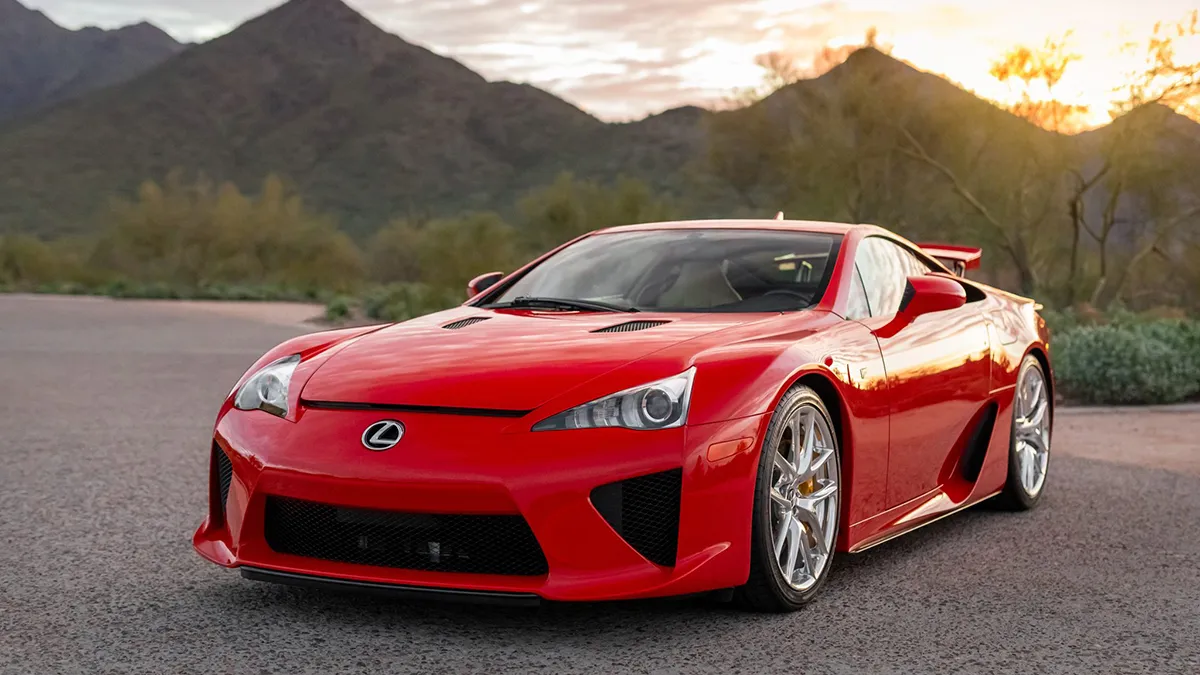
The Lexus LFA started at $375,000 in the United States. Once you added destination, options, or dealer markup, it was effectively a $400,000 Lexus. The Nurburgring Package added another $70,000, and matte-black paint cost an additional $20,000. You could get dangerously close to half a million dollars before taxes.
That was a hard sell in 2012. Not because the LFA was bad. It was spectacular.
The problem was that buyers weren't being asked to decide whether the LFA was a great car. They were being asked whether they wanted to spend roughly $400,000 on a Lexus when a Ferrari 458 Italia started around $230,000 and a Lamborghini Gallardo started around $200,000. The Huracan wasn't out yet, and the Ferrari 488 came later. At the time, the direct showroom alternatives were the 458 and Gallardo, and both came with badges people had spent their entire lives being trained to want.
You could buy the Ferrari, buy the Lamborghini, or spend another $150,000 on the Lexus. That's the part people forget when they look at the LFA today and say everybody should have known.
No, they shouldn't have.
Today, we know the LFA is one of the greatest cars ever built. In 2012, it looked like Lexus had lost its mind.
The performance numbers didn't make the price any easier to understand. The LFA had a 4.8-liter naturally aspirated V10 producing 552 horsepower in U.S. specification, a six-speed single-clutch automated gearbox, a claimed top speed of roughly 202 mph, and a zero-to-60 time in the mid-three-second range. Those were serious numbers, but they weren't $150,000 better than the competition. Cheaper cars could outrun it, and even reviews that loved the engine, steering, brakes, and chassis criticized the transmission for feeling behind the times.
On a spreadsheet, the LFA made almost no sense. Fortunately, a spreadsheet was never the point.
Toyota began the project around 2000. The first concept appeared in 2005, but during development the company decided the original aluminum structure wasn't good enough. So instead of finishing the car and getting it into production, Lexus essentially started over and switched to a carbon-fiber structure.
That decision added years to the program. Lexus developed its own carbon-fiber manufacturing technology and built a carbon-fiber-reinforced cabin approximately 220 pounds lighter than a comparable aluminum structure. The car also used a rear-mounted transaxle to help create a 48:52 weight distribution and packed the chassis with carbon fiber, aluminum, magnesium, and titanium.
This wasn't Lexus building a more expensive version of an existing car. Nothing underneath it came from an ES 350. They didn't raid a parts bin, bolt a V10 into a coupe, add a wing, and call it a supercar.
They built the whole damn thing.
The engine was developed with Yamaha and revved to 9,000 rpm. It used individual throttle bodies, titanium valves and connecting rods, forged pistons, dry-sump lubrication, and a titanium exhaust system. Yamaha's involvement wasn't limited to making power. The sound itself was engineered, using the company's knowledge of musical instruments and acoustics to shape what the driver heard inside and what everyone else heard outside.
That's why the LFA doesn't just sound loud. It sounds tuned.
It starts with a mechanical growl, climbs into a clean metallic scream, and then keeps going until it sounds less like an engine and more like something being ripped open in the atmosphere. There are faster cars. There are more powerful cars. There are cars with twice the horsepower. Very few sound like an LFA.
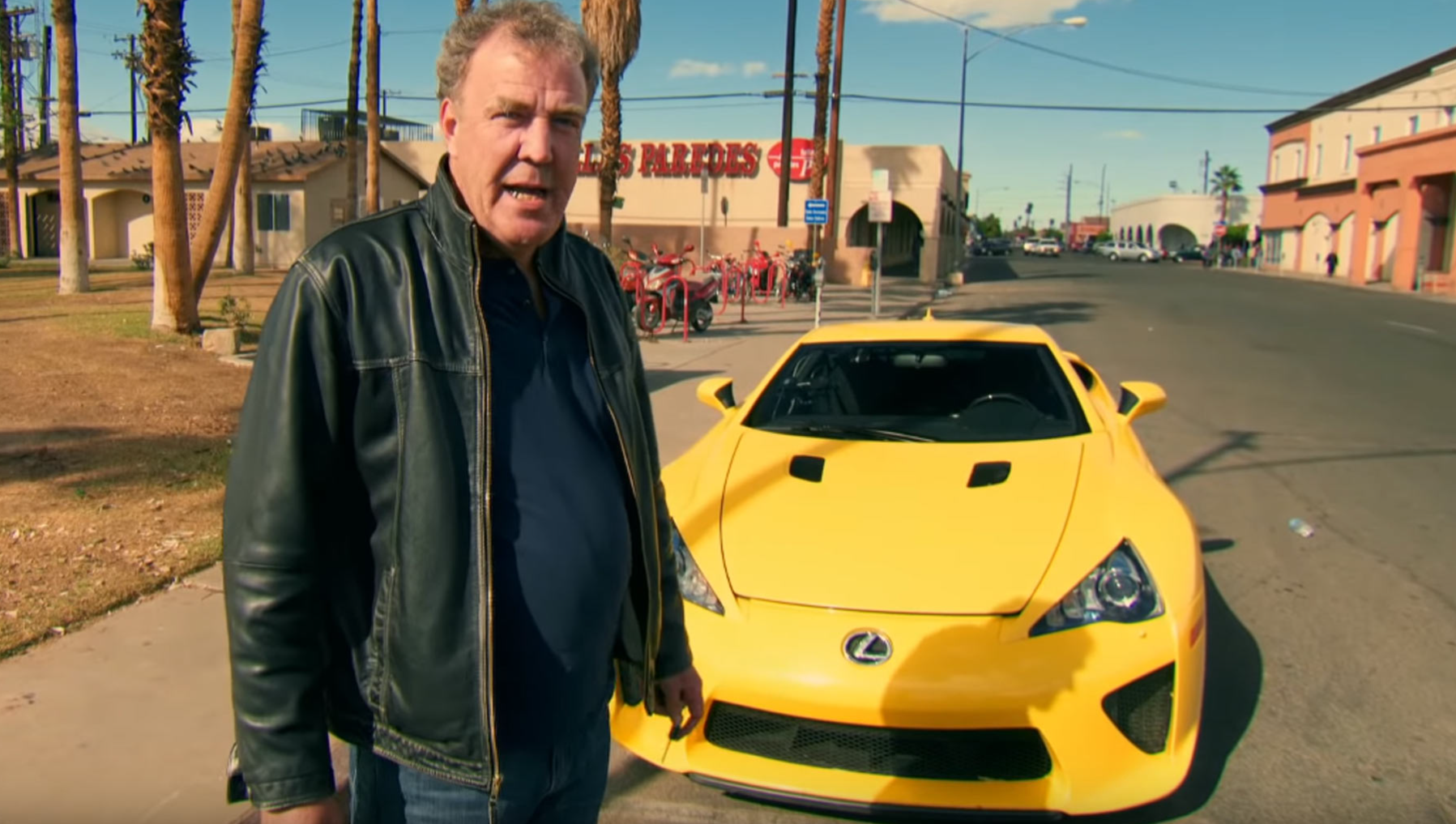
And this isn't just collectors looking backward and romanticizing an old car. I'm a huge Jeremy Clarkson fan, so I understand how much weight this carries coming from him. Clarkson has driven damn near every important performance car built, and he called the LFA "the best car I've ever driven." Years later, he was still standing by it, saying he believed it was the finest car he had ever driven.
Clarkson praises plenty of cars, but he almost always finds something to complain about. The LFA had faults. He knew that. He criticized the price, the performance comparisons, and the things that made it difficult to justify on paper. He still put it above everything else he had driven.
That matters.
Lexus only built 500 LFAs, at a maximum rate of around 20 cars per month between late 2010 and the end of 2012. Of those, 436 were standard LFAs and 64 received the Nurburgring Package. Lexus originally advertised the package as a 50-car run, but the final production count ended up at 64.
The Nurburgring cars received another 10 horsepower, quicker gear changes, revised suspension, lightweight wheels, stickier tires, a larger front spoiler, and a fixed carbon-fiber rear wing. The package added $70,000 to the price of the standard car. One of those cars later recorded a 7:14.64 lap around the Nurburgring Nordschleife, an absurd time for a road car in 2011.
And still, they sat.
"Nobody wanted it" is obviously an exaggeration. Lexus had customers, and the full 500-car production run was eventually delivered. But retail demand was nowhere near what you would expect for a 500-car halo model. Unsold examples remained at American dealers for years. Lexus sold two new LFAs in the United States in 2018 and another three in 2019, seven years after production ended.
That's insane when you look at what happened next.
Today, a normal LFA is roughly an $800,000 to $1 million car, depending on mileage, condition, specification, and whichever two collectors decide they need the same one. The broader LFA market has recorded an average sale price above $900,000, with the highest public sale reaching $1.875 million for a Nurburgring Package car.
I recently saw a 52,000-mile example advertised for around $850,000.
Fifty-two thousand miles.
That isn't a delivery-mile museum piece somebody kept sealed in plastic. That car has been used, and the asking price is still more than twice what it cost new. The Nurburgring Package cars are in another category entirely. Their recorded average sale price is around $1.67 million, and one sold for $1.875 million in 2023.
So what changed?
The car didn't. The market finally understood what it was.
When the LFA came out, people judged it against the Ferrari and Lamborghini sitting beside it. The Ferrari was faster in certain tests, had a dual-clutch transmission, cost far less, and came with the Ferrari badge. The Lamborghini looked more exotic, had a V10 of its own, and also cost far less.
The Lexus needed an explanation.
That's a terrible position for a new supercar. People don't usually spend $400,000 because the salesman gave them a convincing engineering presentation. They spend it because they've wanted a Ferrari since they were eight years old.
Lexus didn't have that history. It didn't have posters on bedroom walls. It was known for building quiet luxury sedans that would run for 300,000 miles while their owners listened to smooth jazz. Then it showed up asking Ferrari money for something that looked, to a lot of buyers, like an overgrown Japanese grand tourer.
The badge worked against the car. Now the badge barely matters.
Enough time has passed that the LFA is no longer being judged as a new Lexus competing against a new Ferrari. It's being judged as a standalone object from a dead era of car building.
A naturally aspirated V10. A 9,000-rpm redline. Hydraulic steering. A carbon-fiber structure. No turbochargers. No hybrid system. No fake sound pumped through the speakers. No attempt to make 1,500 horsepower so the owner can post a drag-racing video before putting the car back on a battery tender.
Just a company with nearly unlimited engineering resources deciding to build the best car it knew how to build, even when the business case was questionable. Toyota has since acknowledged that the project faced internal resistance because it was considered unprofitable, and development was only allowed to continue under the condition that production remained limited to 500 cars.
That's what people are paying for now.
They aren't paying $1 million because 552 horsepower suddenly became impressive. They're paying because Lexus will never build that exact car again. Frankly, nobody will.
Modern supercars are faster, safer, cleaner, and objectively better at almost everything. They also increasingly use turbochargers, electric motors, dual-clutch transmissions, electronic steering, active systems, and software to create performance that would have been impossible in 2012.
That doesn't make them bad. It makes the LFA impossible to repeat.
The transmission everybody complained about is now part of the experience. The lack of low-end turbo torque forces you to chase the top of the tachometer. The engine doesn't give you everything at 3,000 rpm. You have to wind it out, commit to it, and let the car build toward the thing it was designed to do.
It asks something from the driver. That used to look outdated. Now it looks special.
The LFA wasn't a failure because it was overpriced. It was a failure because Lexus built a car for a market that didn't exist yet.
In 2012, people saw a $400,000 Lexus that wasn't as fast as cheaper competition. Today, they see one of 500 carbon-fiber supercars powered by one of the greatest production engines ever made.
Same car. Different understanding.
And if you were one of the few people willing to look past the badge and write the check when everybody else thought Lexus had lost its mind, congratulations.
You didn't just buy a great car. You bought a million-dollar car before the rest of the world figured out what it was.